Showing posts with label foreclosure. Show all posts

Thursday, September 15, 2011

foreclosure listings


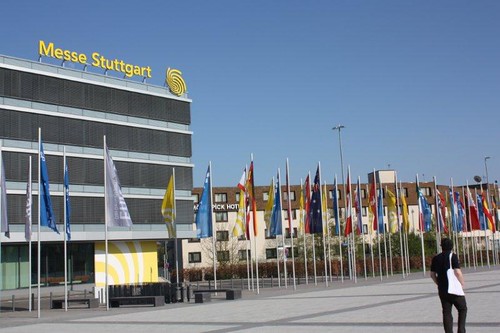
INVEST 2010 in Stuttgart, Germany by Commerce Resources Corp. (TSXv: CCE)


You've undoubtedly seen all of them or study them. Glossy ads or four-color propagates in publications and newspapers promising to instruct you every one of the juicy information regarding successful real estate investing. And all you have to do to learn all these real estate investing surface encounters chuck russo secrets is to pay a rather high sum for a one-or two-day seminar.


Often these types of slick real-estate investing workshops claim that you could make intelligent, profitable real estate investments with simply no money lower (other than, of course, the hefty fee you buy the class). Now, how interesting is which? Make a make money from real est investments you made with no cash. Possible? Not likely.


Successful real estate investment requires income. That's the character of almost any business or investment, especially real estate investing. You put your money into a thing that you wish and plan will make you more money.


Unfortunately too few newbies towards the world of real estate investing believe that it's a magical kind of business where standard business rules do not apply. Simply place, if you would like to stay in real estate investing for a lot more than, say, a day or a couple of, then you will have to come up with money to use and commit.


While it could be true which buying property with absolutely no money down is easy, anyone who's even made a simple real estate investment (just like buying their very own home) understands there's far more involved in real-estate investing that will set you back money. For example, what about any essential repairs?


So, the primary rule people new to real property investing ought to remember is always to have accessible cash stores. Before you determine to actually perform any property investing, save some cash. Having a little money in the bank when you start real estate investing surface encounters chuck russo can help you make more profitable real estate investments in rental properties, for example.


When real-estate investing within rental properties, you'll want in order to select just qualified tenants. If you might have no cash flow when real-estate investing in rental attributes, you may be pressured to take in a a smaller amount qualified tenant as you need somebody to cover you money so that you can take treatment of fixes or lawyer fees.


For almost any real est investing, meaning leasing properties or properties you get to resell, having cash reserved can allow you to ask to get a higher value. You can request a greater price from the owning a home because a person surface encounters chuck russo won't feel financially strapped as you wait for an offer. You won't be backed into a corner and forced to accept just any offer because you desperately need the money.


Another downfall of many new to property investing will be, well, greed. Make the profit, yes, but don't become therefore greedy that you simply ask with regard to ridiculous leasing or second-hand rates on any of your real property investments.


Those a new comer to real estate investing have to see real estate investing like a business, NOT a spare time activity. Don't believe real estate investing is going to make you rich overnight. What company does?


It takes about 6 months to determine if real-estate investing set for you. If you have decided that, hey I enjoy this, then provide yourself a couple of years to truly start earning profits. It often takes at the very least five years to become truly successful in real estate investing.


Persistence is the key to success in real estate investing. If you've decided that property investing is for you, surface encounters chuck russo keep plugging away at it and the rewards will be greater than you imagined.


Socially responsible investments might be emotionally compelling investments, but do they necessarily have compelling financial returns?


The term "Impact Investing" has taken on many meanings in the past few years. I want to end the confusion and underscore that impact investing must by definition deliver impactful and compelling financial returns.


Impact investing has been labeled as a subset of socially responsible investing (SRI). But, it is not a subset of SRI.


The basic premise of socially responsible investing is to avoid investing in businesses that cause harm to the environment or society. Since SRI's approach to investing is narrow and passive, it is by definition often a niche investing strategy, which in many cases has delivered lukewarm returns.


SRIs don't necessarily impact an industry, impact investments necessarily do. Yet, many organizations still treat SRI and impact investing like synonyms - causing confusion.


For example, here is the definition of SRI from ecolife, a website that is an online guide to green living:


"Socially responsible investing is an investment strategy employed by individuals, corporations, and governments looking for ways to ensure their funds go to support socially responsible firms. The concept goes by names like sustainable investing, impact investing, community investing, ethical investing, and socially-conscious investing; it is a non-financial gauge that is used when selecting various investment options that takes into account factors such as environmental, social, and ethical values."


The reality is that some socially responsible investments can be impact investments, but not all impact investments are socially responsible investments. So, SRIs are really a subset of impact investing. According to the Monitor Institute's new report "impact investors want to move beyond 'socially responsible investment'."


All impact investments have the potential to move towards a new economy - an impact economy, not all SRIs will. In fact, most SRIs won't.


Why? Impact investing is socially responsible and must have compelling returns. Returns that make the professional investor consider it seriously as a critical piece in the portfolio. According to Dr. Arjuna Sittampalam, research associate with EDHEC-Risk Institute, "in other words, the investor makes an active decision to seek a social or developmental return alongside their financial return."


Since impact investments create compelling returns, they have a greater chance of attracting more serious professional investors than SRIs -- a necessity for creating worldwide social change and impact.


The Global Impact Investing Network (GIIN) defines impact investments as those that: "aim to solve social or environmental challenges while generating financial profit. Impact investing includes investments that range from producing a return of principal capital (capital preservation) to offering market-rate or even market-beating financial returns. Although impact investing could be categorized as a type of 'socially responsible investing,' it contrasts with negative screening, which focuses primarily on avoiding investments in 'bad' or 'harmful' companies - impact investors actively seek to place capital in businesses and funds that can harness the positive power of enterprise."


This definition is more on target with the real definition of impact investing, but to revise part of GIIN's definition: Impact investments only include investments that can offer market-rate or even market-beating financial returns.


So, my definition -- impact investing must achieve four significant goals:


1. Make an impact in solving a pressing problem of our time,

2. Generate compelling returns for investors,

3. Generate growth for economies, and

4. Generate prosperity for developed and developing nations.


An example is my own case-in-point. I founded SunEdison that created the power purchase agreement (PPA) model for the solar industry. This business model used net metering, streamlined interconnection standards, ways to connect to the grid, and actually provided a new solar power service to customers.


Investments in PPAs are delivering 7-12% unleveraged after tax returns. In today's financial environment; these are compelling returns given the low risks.


Plus, PPAs have lowered the use of fossil fuels to deliver electric energy; created thousands of jobs worldwide and are growing. They have impactful financial returns and impact a big problem.


According to the Monitor Institute's new report Investing for social and environmental impact: a design for catalyzing an emerging industry "it is certainly plausible that in the next five to 10 years investing for impact could grow to represent about 1 percent of estimated professionally managed global assets in 2008. That would create a market of approximately $500 billion. A market that size would create an important supplement to philanthropy, nearly doubling the amount given away in the U.S. alone today."


But that is only a start, a start to an "Impact Economy." To really make a difference - to leverage impact investing to create an impact economy, it must be larger. Some estimate that we need to invest over $1 trillion to combat issues like climate change, poverty, and lacking global health, to put the world back onto a stable more equitable footing.


So, let's put our money where the impact is. Stop selling impact investors short.


Jigar Shah is CEO of the Carbon War Room, a nonprofit that harnesses the power of entrepreneurs to implement market-driven solutions to climate change and create a post-carbon economy.


NEW YORK—The nation's top experts unanimously agreed Tuesday that the current struggles of the U.S. economy were no reason whatsoever to stop investing in print media, which they said was easily the safest and most profitable place to invest one's money.


Without exception, leading authorities across all relevant disciplines said that while traditional low-risk instruments such as CDs, bonds, and gold were still relatively secure investments, only the nation's beloved print media outlets could offer both the reliability and the potential for tremendous financial gain required for guaranteed peace of mind.


"Print media is far and away your best bet in this tough fiscal climate," said the nation's foremost economists. "Just put your money in and forget about it for 10 years, 20 years, 50 years, doesn't matter. No economic downturn on earth can touch it."


"There's no question about it," continued all economic experts. "If you're a nervous investor—and you should be in this climate—you should be pouring all your cash into your local broadsheet right this second."


One of millions of Americans who will always support print media no matter what new technology comes along.


Experts went on to tell reporters that not only is there no safer place to invest than print media, there's also no sector of the economy with more promise for growth. Urging investors to diversify their stock portfolio among national and regional newspapers as well as dailies and weeklies, they said print media will be a "bonanza" for shareholders, even as the economy as a whole flounders.


"Print media is a cash cow that will multiply an investment over and over," said the experts. "Other products fail, real estate bubbles burst, but print media is here to stay. The only retirement strategy anyone needs is as close as their local newsstand."


"People who invest in print media are going to see their holdings grow by leaps and bounds, and they'll probably ask themselves, 'How can this be real?'" continued the experts, every single one of whom described print media as "the closest thing there is to a money tree." "Well, trust us, it's real. You can expect to make a lot of money very quickly, and best of all, you'll do it by supporting a pillar of American society."


In explaining print media's remarkable appeal, the entire financial community said citizens rely, and will continue to rely, on printed newspapers to keep them not only informed about current events, but better prepared to function as the kind of knowledgeable citizens a robust democracy requires. Others pointed toward people's deep emotional attachment to print media and the loyalty readers have for the treasured publications as a financial guarantee. In addition, investors from every major financial firm strongly noted that newspapers are an integral part of the ongoing American story that is written each morning, chapter by chapter, on black-and-white newsprint by decent, hardworking men and women who live in the very communities their newspapers serve.


Not investing hundreds of millions of dollars in newspapers right this very second, they added, would simply be foolish.


"No matter how tough times get, people will never turn their back on their newspapers," said every media expert in the nation, adding that newspapers would likewise never, never, never take their readers for granted, because it is readers that the print media industry depends on, and the nation's newspapers and magazines have always, without fail, worked tirelessly to provide readers with the highest-quality product possible. "They wouldn't desert their trusted print media outlets like that. Besides, everyone knows that new media technologies come and go, and that newspapers are an indispensable part of our national identity that must be protected by all of us, and chiefly by shrewd investors or even ordinary business owners who take out a very reasonably priced quarter-page ad. Or something smaller. You'd be surprised how much mileage you can get out of even a tiny little classified."


"The weekly newspapers are, of course, the most vital," the nation's media experts added. "We'd really be lost without those."



Thursday, September 9, 2010

foreclosure investing


HTML clipboard

Richard Green:


Is housing the best way for low-income people to build wealth?, by Richard Green:
I was thrilled to be invited to the Future of Housing Finance conference held at
the Treasury Department and co-sponsored by HUD this week. It was particularly
nice to be seated next to Self-Help's Martin Eakes, whom I have admired for some
time. Like Elizabeth Warren, Eakes long ago had insights into sub-prime lending
that I wish more of us had taken seriously.

At the conference, Martin worried about a conversation that emphasized the
need for robust underwriting standards for the mortgage market going forward.
The three most important standards are loan-to-value ratio, payment-to-income
ratio, and credit history. As Martin pointed out, African-Americans have less
wealth available for down-payment than others (even after controlling for
income), and have lower FICO scores than others, and therefore will be denied
access to credit at a greater rate than others if underwriting standards are
tough and uniform. Because much of the reason that African-Americans lack wealth
is because they have been systematically stripped of wealth for many
generations, policies that reduce access to credit disproportionately for
African-Americans violate fairness.

The events of the past six or seven years show that loose underwriting does
nobody any favors, either. Foreclosures are terrible things for the families who
experience them and for the communities that have large numbers of them. The
whole point of underwriting is to prevent default and foreclosure, and the
unpleasant fact is that downpayment and FICO are predictors of likelihood of
default.

In the era where almost all mortgages were self-amortizing, housing allowed
families to build wealth because mortgages were a form of forced saving. Those
who got a 20 year mortgage in 1960 owned their house free and clear in 1980;
households gained wealth not because housing was such a great investment, but
because they built equity, month after month. Housing was a particularly
attractive way for those of modest means to save, because they could live in the
very piggy bank they were building. In principle, however, these households
could have rented and taken the difference between a mortgage payment and a
rental payment and put it in another investment (a small business or the stock
market). But we know that in the absence of

nudges, people tend to save less.

Perhaps, then, the government could come at the savings issue more directly
by giving low-income people a nudge toward saving. Suppose it developed a 401(k)
type plan that matched the savings of those with below-median incomes at 2 to 1.
This would encourage savings that then could be used for a down payment or a
host of other investments (say a Vanguard index fund). This would cost taxpayers
money, but perhaps less than mortgage programs built on thin underwriting
standards. At the same time, getting people into the habit of savings could
produce other social benefits as well. I am not sure such a plan is practical,
but I think we do need to think about how we can help people who have been
denied wealth for generations how to start accumulating assets without relying
entirely on the housing finance system to do it.

We also need to ensure that when people with limited experience in such markets do participate in financial markets by buying houses, investing their savings, etc., they aren't steered toward products that are highly profitable for the originator, but not the best fit for the borrower/investor. It's my understanding that such behavior -- steering people into the wrong products -- explain part of the problems observed in subprime markets. Perhaps we need a consumer finance protection agency? And someone to lead it who understands these issues? However, it's not enough to simply provide advice about financial products. That will help, but some of this was fraud that needs to be prosecuted -- it won't stop otherwise.


eric seiger

Investing with Perspective by mwinvesting


Thursday, September 2, 2010

foreclosure search


Down With Tyranny uncovers the photo above, and lays out what’s new in the David Rivera alleged domestic abuse scandal. The photo, by the way, shows Rivera with the alleged victim’s mom. Drip, drip …

From the DWT blog:


There’s growing chatter in Miami political circles these days that one of its most influential and controversial politicians is about to fall from grace. Reliable sources tell me that several major South Florida media outlets will soon be reporting that Miami GOP Chair and candidate for Congress, David Rivera, has a repeat domestic violence record dating back to 1994 and was caught lying about it to the press, something first reported here at DWT early last month.


This story’s impeding breakthrough into the mainstream media is sure to cause trouble for conservative rising star Marco Rubio. David Rivera is a self proclaimed “disciple” of Marco Rubio and served as his protégé and strong arm in the Florida Legislature. The two Florida politicians own a house together that went into foreclosure last month. Rubio headlined a fundraiser for Rivera last month in Washington DC and the two have traveled to Las Vegas and Los Angeles together for fundraisers.


Rubio, the bright shiny object of both the Tea Party and FOX News, embarrassed by the Sharron Angles, Ken Bucks and Rand Pauls, will be placed in an awkward spot when it is made public that his best friend has been accused of Domestic Violence and furthermore that he has put forward the absurd excuse that it is merely a case of mistaken identity.


There’s plenty more, including details and timeline, at DWT. Most potentially damning:


A firsthand source told me that the NRCC asked Rivera of his domestic violence past in April, and he told them it’s a case of mistaken identity. Both the Miami New Times and the Miami Herald have also asked Rivera about his domestic violence record and he denies even knowing the woman, Jenia Dorticos. Given Rivera’s history of being caught red-handed lying to reportersabout the company he keeps (and just about everything), I dug a little deeper and here’s what I discovered.


• David Rivera the Republican politician is the only David M. Rivera that ever comes up when you conduct a public records search on the Miami Dade County public records website where you can find his mortgage deed, etc.


• Several of the victim Jenia Dorticos’ friends have refuted Rivera’s claim that he doesn’t know her and say the two dated in the 1990′s.


• Rivera is photographed with Dorticos’ mother at a fundraiser in April headlined by Scarface star Steven Bauer (“Manolo”). (above)


• Rivera has been dodging reporters now for 14 days and has kicked them out of recent Republican events and offices.


• Marco Rubio (again, Rivera’s closest friend) and David Rivera’s attorneys have been intimidating and threatening South Florida media outlets with a $10 million law suit if they report this story. Of course, if Rivera’s legal team wanted to, they could demand an injunction, but that would then force the state attorney’s office and Rivera to turn over all evidence related to this case in court.


Again, drip drip …


I think that if you trace HAMP to the source you will find this was an invention of the bureaucrats at the Treasury who fooled both the public (and probably Obama, perhaps the new Secretary) and even the banksters. If you read the implementing instructions it becomes clear this is a maze that few can find an ‘approved’ entry to or exit from. Just the ‘dictionary’ was 136 lines with 10 cells on an Excel spreadsheet (190kb). I was looking at the fifth revision.


HAMP did forestall a few foreclosures, but it took jumping through hoops. Only a small sum went to the service folks and the rules were changed quarterly. On the banks side they wanted it to work as it could put off the loss while it was in HAMP. It was badly implemented because it was like that pea and shell game. I got a headache reading through all the ‘rules’ and categories and realized this lacked a hard and fast rule. It was ‘optional’ for the bank and the borrower.


It is fair to blame the banksters for most of the failure, but the Treasury was most at fault and those folks who created it are the crats who are not swept away with a changed administration. These critters do either retire or seek jobs with those who must figure out the rules.


I’m giving Obama and maybe even Timothy a pass on this one.. they had a lot on the plate and let the crats do the chores. Congress is who I’ll blame.. they should have never raised the lending limits that Fannie and Freddie could provide as that’s what sent this bubble aloft. People have to have jobs that pay enough to pay these loans. They did not and even as we see from this tale.. people have tried and can’t due to a host of issues.. but folks… a $2,600@ payment is only part of home ownership. You need a net income of $10,000@ month to service such a debt. Clearly a lot of folks were to blame.


‘Wanting’ this house is not planning so as to afford it. People acted imprudently and now we’re ALL going to pay and pay and pay. The lawyers and banksters never pay, which is why they need to be REGULATED. That is worth getting angry over. Home ownership was never (after maintenance, taxes and insurance) going to appreciate more than 1-2% a year.. if you maintain and update. The whole idea of buying houses that will eat your income to the extent these folks have was NUTS.


Yes it was also a stall tactic, but that’s not a bad thing given the mess we’re all in. Congress are who we need to rail on. Fannie and Freddy need to go away. Local banking isolated from the ‘products’ is what we need back. They worked and worked with the borrower. Today the investors are detached and suckers too.


make money from home jobs

foreclosures Learn Search & Buy for Blog by Moriah Martin


Tuesday, July 27, 2010

foreclosure statistics


How HAMP Makes Elizabeth Warren The Only Choice For Consumer Protection


Thursday, 07/22/2010 - 5:19 pm by Mike Konczal | One Comment

No one else has been a stronger advocate for public disclosure.


There’s a debate going on about who should be nominated to run the Consumer Financial Protection Bureau at the Federal Reserve. One side says Elizabeth Warren, while another says someone from Treasury, likely Michael Barr.


At a quick glance you might not see a big difference. As Felix notes, Michael Barr is very strong on consumer finance.


But I think Warren would be a far superior choice. There are many reasons why, but I want to discuss a very specific one here that distinguishes her from anyone in Treasury. The biggest: she is a strong critic of HAMP, Treasury’s largest intervention into the massive foreclosure crisis hitting millions of regular Americans, and she demands accountability on behalf of the people.


HAMP As Failure


The Home Affordability Modification Program is widely considered to be a failure. Here is Shahien Nasiripour reporting on the latest numbers from June. They haven’t remotely hit the numbers they projected. Homeowners continue to suffer from a lack of modifications due to servicer problems and the overvaluation of their books. I wrote here about how the creator of the mortgage bond instrument in the early 1980s said in 2007 that a major market failure was coming. There was need for government action.


HAMP is such a failure that it is a bit of a game among the financial bloggers as to who has the best write-up of how bad it is each month and what the killer statistics are that prove it. I’m calling Stacy-Marie Ishmael over at FT Alphaville this month’s winner with BarCap vs HUD on HAMP.


Evidence shows that there are principal increases for 80% of the people who go through HAMP. That is the exact opposite of what you’d like to see! It lowers interest rates, but it also increases the length of the loan. And for those who don’t have principal reduction, there is a massively high redefault rate. People lose their homes anyway, even after jumping through cumbersome hoops.


Predatory lending is hard to define, but a product is predatory that sinks people deeper into debt without the expectation that they can pay it off. And that is exactly how HAMP functions. For millions of people HAMP is their main interaction with the government and embodies what the government is capable of, and this creates disillusionment and discredits the liberal state in a profound way.


And Warren Demands Accountability


The Congressional Oversight Panel, lead by Warren, has been in the lead at making information public and bringing the complaints of the people straight to those in power. (It falls under her jurisdiction because HAMP uses TARP money.) When you see the fights on youtube between Warren and Geithner, the biggest ones, the ones that make Geithner cringe the most, it is about how HAMP isn’t working. Click through on that link to watch a video that gets straight to this. She demands accountability from the government and from the banking sector on the single most important issues facing Americans right now.


This is important. There’s pressure to be quiet, to hope that a quick housing and economic recovery will just make this whole foreclosure crisis go away. But Warren has demanded answers. COP released a report in early 2009 about the problems with HAMP, data collection and foreclosure, a report that still stands up. She’s done that at every step of TARP, but it matters here specifically for consumer protection.


And this is exactly how the CFPA should work. They fight to get good information disclosed to the public about how the banks and the Treasury department are failing the American people, reporters and wonks explain the information to the public, Treasury is held accountable. Treasury is currently working overtime to make HAMP work better; every month they are putting pressure where they can to make it better. That’s how a healthy government is supposed to work, but it can only be done if the tone is set by an outsider. And Elizabeth Warren is the one qualified candidate with a proven track record of standing up to the banks and to the Treasury.


And as Steve Clemons wrote: “It’s about time that at minimum, the White House got a ‘team of rivals’ on economic policy rather than just a ‘Team of Rubins.’”


Mike Konczal is a Fellow at the Roosevelt Institute.


Join the Discussion


4 Comments


  • Note: the video is not showing on iPad.

    Any chance of an alternative format (I assume the one on the page is in Flash)?

    Thx.


    Posted by readerOfTeaLeaves | July 9th, 2010 at 11:03 pm


  • Parents, Education, & Symptoms


    Parents have got to get in the game, if they want to continue participating. The education system is an abject failure. It has to be replaced, and the tool is there to do it. Parents do not require permission from government or multinational corporations. Uncontrolled multinational growth is a function of community failure.


    Of course the multinationals want nations, states, communities and individuals competing against each other; their controlling interests naturally breed on control. Of course they pay the economists to argue that competition is the be all and end all. On the one hand parents are competing in a system designed to ensure they lose, and on the other they attempt to give their own children a comparative advantage over other kids, locking failure in for the community.


    The best thing parents can do is build strong, independent communities, so all kids can be successful. In net, parents are isolating their children into a competition with the multinationals, while their own governments are offering them a near-term profit to dissolve their families, paid for by the multinationals, which the governments are competing for, by giving them your money, your property, your taxes, and your ideas. And what makes it all work is parents competing to get in their cars and go shopping to feed the multinationals.


    Economies are self-correcting. Multinationals cannot change their behavior. They destroy their own food chain, new families, by economic design. The multinationals are writing the laws, to which parents are subjected, and to which the multinationals are exempted, in a political system paid for by the parents. If the community is simply an extension of the State, the system may only liquidate. A constitution is designed to protect the State from itself. Only a community can protect liberty, and liberty is the path to the future.


    Much of America is a victim of its own success. The multinationals have grown alongside strong communities. GDP measures consumption cost. It in no way measures investment or profit. The multinationals are simply a looking glass, and what parents see is what they want to see. Politicians tell parents whatever they want to hear, largely that the problem is government or corporate.


    Yes. The more you shop, the longer it will take for the machine to target you, but the machine has caught up to everyone now. An American flag does not make a multinational American. Because some communities choose to be fat, dumb, and lazy in no way limits other communities. Liberty is not subject to majority vote. If a majority jumps off a bridge, will you?


    Anything is fixable, if the right people are in charge. In this case, the parents have to take charge of the economy. There is always a reservoir of goodwill for children somewhere. When you have ruled everything else out, what remains, no matter how improbable, is the solution. Not so ironically, Barack Obama was a community organizer.


    So long as those cleats hold onto the bank, and you have a good strong rope of small businesses, we’ll pick that $500T load.


    Right now, your problem is RICO organization of multinationals through every level of government to preempt participation by small family businesses, to backfill the economy.


    Posted by kevinearick | July 10th, 2010 at 4:26 pm


  • @readerOfTeaLeaves Unfortunately the video we embedded is from GRIT’s site, and they put it up in flash, so there’s not much we can do. Sorry I can’t be of more help!


    Posted by Bryce | July 12th, 2010 at 10:57 am


  • Thanks Bryce. I came back and viewed it on a ‘not-an-iPad’, but appreciate your explanation.


    Posted by readerOfTeaLeaves | July 12th, 2010 at 5:41 pm


Leave a Comment


Name (required)


Mail (will not be published) (required)


Website


penis enlargement

iPhone 4 hitting 17 more countries on Friday | Apple - CNET <b>News</b>

The newest flavor of Apple's smartphone will arrive in additional markets July 30, including Canada, Denmark, Ireland, Italy, and Singapore--but not South Korea. Read this blog post by Lance Whitney on Apple.

Francine Hardaway: <b>News</b> Died This Week

But both the news and journalist Daniel Schorr died this week. Schorr died peacefully after a long and productive life. The news, however, was murdered. Unworthy commentators destroyed news.

Mimicking Apple an imperative for PC makers | Nanotech - The <b>...</b>

PC makers are imitating Apple as fast as they can--and for good reason. Read this blog post by Brooke Crothers on Nanotech - The Circuits Blog.


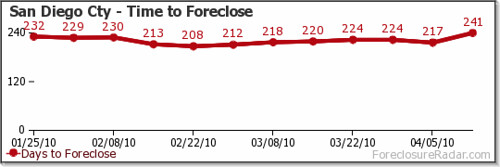
San Diego County Foreclosure Statistics by Shane Pliskin


internet marketing course

iPhone 4 hitting 17 more countries on Friday | Apple - CNET <b>News</b>

The newest flavor of Apple's smartphone will arrive in additional markets July 30, including Canada, Denmark, Ireland, Italy, and Singapore--but not South Korea. Read this blog post by Lance Whitney on Apple.

Francine Hardaway: <b>News</b> Died This Week

But both the news and journalist Daniel Schorr died this week. Schorr died peacefully after a long and productive life. The news, however, was murdered. Unworthy commentators destroyed news.

Mimicking Apple an imperative for PC makers | Nanotech - The <b>...</b>

PC makers are imitating Apple as fast as they can--and for good reason. Read this blog post by Brooke Crothers on Nanotech - The Circuits Blog.


big white booty

San Diego County Foreclosure Statistics by Shane Pliskin