Friday, April 9, 2010

Careers Employment


How much longer will America's 'gravest recession' last?


Of course, no one knows for sure, but a table produced by the Bureau of Labor Statistics, which since 1939 has tracked the increase or decrease in non-farm jobs as reported in its monthly Employer Survey, offers a very cautionary note.


From its post-Great Depression base of 29.2 million, America added 109.6 million non-farm jobs until reaching the peak figure of 138.8 million in 2007. Since December 2007, when this Great Recession started, non-farm payrolls have declined by 11.2 million, and employment overall -- of all types -- has declined by 13.0 million jobs.


Replacing these millions of jobs -- and adding the 140,000 a month needed in order to keep pace with growth in the labor force -- must be our nation's highest priority. And yet, sadly, it isn't.


The White House and Congress seem wildly disconnected from the jobs crisis, perhaps because they spend so much time aiming a strobe light on health care reform, Iraqi elections, a new START treaty, financial industry reform, climate change, an amended No Child Left Behind, Afghanistan and a balanced budget.


The BLS non-farm payroll table offers a focused summary of job creation in the past and a strong sense of what may be possible in the future: America's best three-year job creation total was 10.3 million, which occurred from 1997 to 1999; its second best effort produced 9.4 million jobs between 2004 and 2006; and the third-best performance was 7.7 million new jobs in the years 1984 to 1986.


But America needs to find at least 11.2 to 13.0 million jobs right now just to get us back to December 2007's employment level, which itself was no great shakes, and 22 million new jobs if we want to have, as morally we should, near full real employment. And for every month we delay further, the total increases by 140,000 jobs, which, if measured over three years, would total a further 5.0 million jobs.


Yet not once in seven decades have we ever added more than 10.3 million jobs in three years.


Economists can debate which single 'lever' can best add millions of jobs a year for the next several years but, to date, we have used almost none of the arrows in the nation's job recovery quiver. Meanwhile 18 to 20% of America's workers have been unemployed or extremely underemployed for 27 months. And the levers which we have ignored most consistently are programs modeled after FDR's Works Progress Administration which from 1938 through 1940 employed 5.8 million jobless Americans. That's roughly 17% of the then entire non-farm workforce, a figure comparable to the task confronting our nation today.


This White House and this Congress seem intent on proving that history repeats itself, first as tragedy and then as farce. Their initial jobs programs have been 'missing in action', and their use of phantom 'jobs saved' versus 'real jobs not created' is beyond misleading.


Like the "unemployables" of the Great Depression before FDR came along, America's jobless today face the cruelest of choices: hunger, homelessness and declining heath. And their anxiety and anger are growing even as their hope fades.


But the jobless are not completely destitute in a democracy -- they still own their votes which can be 'spent' on election days or not. And if the BLS total non-farm payroll history is any indication, the jobless will have at least three election cycles -- 2010, 2012 and 2014 -- to spend those votes, and then, as embittered as they will be, theirs will be 'the last (sad) laughs'.


Rick Sloan is Director of Communications of the International Association of Machinists and Aerospace Workers, and Acting Executive Director of "Ur Union of Unemployed". Ur Union of Unemployed, or UCubed, is a community service project of the IAM that offers the unemployed a way to work together to help end the Great Recession of 2007.


Thanks for your more balanced view on this issue, DCist.


As a 20-something who has left home, tried (and sometimes failed) to make it on her own, and is dealing daily with the worst job market in history in a nation where health care (and other) costs are rising at unprecedented rates (as you point out), I think we at least deserve a fair shake by the media.


In the article, a Brookings Institution representative claims that the relationship has changed between parents and adult children - he also claims that "no one resists or resents it" and "oung people expect it." That's both unfair and untrue. This young person does not expect parental hand outs - and while I may ask for and accept help from time to time, I am under no delusion that my parents are required to give it or do so easily.


I'm not advocating that parents do their children's jobs for them. Certainly we need to address our own professional problems, accept our own failures, articulate our own needs. I regret that adults have to deal with children and parents who feel the behavior mentioned by representatives of Sibley Memorial and the University of Virginia is acceptable and appropriate. I apologize. Yes, our generation has a lot to learn.


But I take heart from the fact that we are interacting with our parents - a far wiser and experienced generation - more than any other group has in history. For some, parents are undoubtedly a crutch. But for me and others like me, my parents are a gift of inspiration and intelligence whose support isn't crippling, inappropriate, or unhealthy. Just because our parents did it on their own doesn't mean that accepting advice or help (especially in new situations with great risk, such as purchasing a home or choosing a college) is to be reproached. My parents DID know the right questions to ask; I'm glad I sought and took their advice.


bobby ferguson's business know bobby ferguson detroit bobby ferguson's business know bobby ferguson detroit bobby ferguson's business know bobby ferguson detroit bobby ferguson's business know bobby ferguson detroit bobby ferguson's business know bobby ferguson detroit bobby ferguson's business know bobby ferguson detroit bobby ferguson's business know bobby ferguson detroit bobby ferguson's business know bobby ferguson detroit bobby ferguson's business know bobby ferguson detroit bobby ferguson's business know bobby ferguson detroit bobby ferguson's business know bobby ferguson detroit bobby ferguson's business know bobby ferguson detroit bobby ferguson's business know bobby ferguson detroit bobby ferguson's business know bobby ferguson detroit bobby ferguson's business know bobby ferguson detroit bobby ferguson's business know bobby ferguson detroit bobby ferguson's business know bobby ferguson detroit bobby ferguson's business know bobby ferguson detroit bobby ferguson's business know

Wednesday, March 24, 2010

why internet marketing


A few weeks ago Ken Fisher wrote a popular blog post about how ad blocking software can have devastating effects to the websites that you frequently visit. Mr. Fischer describes how ad blocking software is responsible for showing false page view data to ad networks. As a result each ad is priced at a lower rate because the number of impressions are significantly smaller. The number of page views is an extremely important metric for websites that sell advertising based on a CPM price model. So it’s only understandable that Mr. Fischer and other online publishers will hold a grudge against ad blocking software.


While I can understand Mr. Fischer’s frustration I cannot sympathize. To be completely honest I use ad blocking software every day. In fact on at least one occasion add blocking software has been responsible for a pretty embarrassing moment. So you’re probably asking yourself why does someone who feels so strongly about marketing block advertisements? It’s simple really, I hate ads.


What? You hate ads? How can you write for Marketing Pilgrim and hate ads? In my opinion marketing is fundamentally organizing people around information. Interrupting people with abrupt irrelevant commands isn’t how you organize people around information. Instead speaking to them on a unique and authentic level is more effective and genuine.


Putting philosophy aside, in my opinion ads are the worst way to monetize content. Generally speaking an increase in on-page advertisements contributes to a degraded user experience. Which can lead to lower user retention levels and decreased page views. Online advertisements are also ripe with fraud and manipulation. Historically click through rates have been at around 2% for most online advertisements. All of these factors and more contribute to the extremely low return on investment.


Online ads add to a decreasing user experience by taking attention away from the site’s primary content and placing it on the ads. This is not the actions of rogue spammers, this is the fundamental method to making any substantial revenue from ads. An excellent example of this in action, is taking a look at Google’s own recommendations for ad placement in the Adsense program. Here we see Google advises users to place ads on every available white-space on the page. This is a huge contradiction for a company that was so widely praised for starting with such a clean user interface.


Most ad platforms have large potential for fraud and manipulation. This is is an issue that not many professionals in IM discuss publicly because, quite honestly, whether they are participating in the fraud or not they still stand to profit off of ad manipulation. To a great extent Google and some of the other larger ad networks have gone to great lengths to minimize the impact of this type of fraud. However, any potential for fraud creates an uneasy market place where advertisers and publishers are continually left wondering if they are being taken advantage of. Google doesn’t help matters by keeping the exact specifics of their pricing model a secret from both advertisers and publishers. What’s even more devastating about these fraud schemes is that they can manipulate entire ad markets not just the individual ads they are targeting.


We reported back in January that the average click through rate for Google Adwords is around 2%. This means that 2% of the site visitors are clicking through on the ads. Most businesses off the Internet wouldn’t be able to survive with a 2% conversion rate. The only way to make substantial revenue from ads on the Internet is to completely dominate the market and control the flow of information. *cough* Google *cough*.


Wow Joe what do you want me to do? Not make any money? Absolutely not! But I do think that more companies and content producers need to experiment with different business models that aren’t reliant on ad dollars. The mainstream media on the internet is already starting to experiment with pay walls and different premium membership options. While I generally agree with the old saying that information should be free, I do think there is substantial room to monetize parts of the web that are currently a free-for-all. For example there are many opportunities to monetize communities and forums that provide quality content and meaningful dialogue to its users. Another potential opportunity is product development. Content developers and publishers should work to create their own products aside from their content that they can offer to their regular subscribers for premium fee.


So next time you see a drop in your ad revenue don’t blame the users, blame the ads. They got you into this mess and they aren’t going to get you out!


Social Media Monitoring in Just 60-Seconds. Guaranteed!


The Academy Awards are not yet over, so I’m going to make my prediction: Inglourious Basterds will win Best Picture.


I know, I know — it’s been Hurt Locker’s awards season, and so far, Hurt Locker’s night. But that is precisely why I’m even more sure that Basterds will take the top spot.


Here’s the thing: The Hurt Locker was an amazing, important film. But did I enjoy it? Of course not. It was very tough to watch, and while gripping, not exactly what you’d call a happy place. Basterds, while violent and shocking and about the Holocaust never you mind, was a damn fun movie to watch. People love that movie. They love talking about it, pulling it apart; they love the characters (Christoph Waltz! What a delightfully evil and charming villain! Shoshana, as badass a heroine as Quentin Tarantino has ever created! The Bear Jew, fetish object for niches across the Internet! Look, it’s B.J. Novak and Mike Myers! And — Brad Pitt!). Oh and Diane Kruger’s not too rough on the eyes, either.


Yes, Inglourious Basterds has had the benefit of the Harvey Weinstein marketing machine, not to mention a pretty smart ongoing campaign of marketing (hello, Rabbis, glad you enjoyed the film!). But none of that would matter if the movie wasn’t good.


Look at previous awards shows — any time there was an ensemble cast award to be won, Basterds took it handily (People’s Choice, Screen Actors Guild). It’s been nominated for the key awards — screenplay, director, picture. So has Hurt Locker, obviously; and as Jason Reitman can tell you, numerous nominations does not an actual Oscar make. But — I think that Oscar voters like to reward the movies that they like. Hold that thought for a moment.


Consider the Oscar screener. Viewed in a home theater, most likely — so on a second watch of Avatar, which is dazzling in many ways but not really in its story, a voter would likely be less impressed than, say, in a giant IMAX theater. And, as mentioned above, Hurt Locker is a great film, an important film, but — yes — a challenging film. (The same way The Messenger is an important but challenging film. Up In The Air is not a challenging film.) Inglourious Basterds, on the other hand, hits that magical sweet spot: An important film (a Holocaust film, lest we forget what the Academy just loves), but still, a damn fun one — and one that is even more fascinating on the second watch, with new details revealing themselves like the little nuggets that Tarantino seems to bury just for the extra-obsessed fan.


And — bias declared — I’m Jewish. And what can I say, Jews seems to be extra-engaged by Inglourious Basterds, for obvious reasons. (See reference to bloodthirsty, revenge-crazed rabbis above; or, just a proud Jewish papa.) If I make a joke about Jews in Hollywood I will certainly not be the first; indeed, Steve Martin and Alec Baldwin made one about Basterds just tonight (about how easy it would be for Waltz’s “Jew Hunter” in the Kodak Theater tonight). (Never mind recasting Jews as virile, badass avengers.) I’m not saying that there is bias in voting, per se — I’m saying that some movies strike a real chord. That’s how hits are made. The effect they have on us, as audience even as we’re doubling as critic, is real. If it hits the brain it’s one thing, but if it hits the gut, well, that’s quite another.


Okay, now: Let’s go back to the thought I told you to hold. Cut to the bizarro new Best Picture rules. There are ten nominees — twice as many as usual — and along with the more wild-card, pot pourri nature of the competition, there’s also equally wildcard new voting rules: You vote for your favorites according to rank. So — you can vote for the film you think ought to win, or the film you want to win, or your favorite; or for all the films you’d like to win over the one film you hate. This encourages strategic voting (see Steve Pond’s Oscar picks at The Wrap) — but also frees people up to vote for their second-favorite film second, or their guilty-pleasure film second, or their anti-Avatar film second. You see where I’m going with this. This race has officially been Avatar vs. Hurt Locker, but if there was ever a dark horse that would come up the middle, it’s Basterds.


And now, as the Oscars are almost over, Hurt Locker has kicked ass like a Bear Jew taking aim at a Nazi skull, and there are two big awards still to go: Best Director and Best Picture. Kathryn Bigelow will win Best Director, and should, for a variety of reasons (getting a picture made and overcoming the obstacles thereto is a big part of that). But with votes cast for Hurt Locker across the board, for all the big, pointed awards — well, the way is clear for Best Picture for just a little leeway. Especially when everyone else will surely vote for the other one, be it Hurt Locker or Avatar. And after all, you’re supposed to rank your favorites accordingly, right? Of course right.


It’s just a theory. At this point, no one knows except some dude in glasses a pocket protector at Price Waterhouse-Coopers. But — with minutes to go in the ceremony — I’m making the call: Inglourious Basterds will win Best Picture.


And should.


bill bartmann


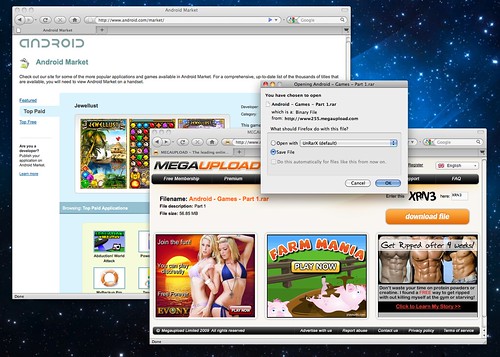
Why Pirates are killing the Android Market by PACMan3000


Tuesday, March 2, 2010

personal finance money management


This is an interview with Catey Hill, author of the hot new book SHOO, Jimmy Choo as well as the Money & Business Editor for the NY DailyNews.com


1. What motivated you to pen SHOO, Jimmy Choo?


Maybe I'd watched one too many episodes of Sex & the City, but when I moved to New York, I lived it up. I got an apartment I couldn't afford in Chelsea, went out way too much and bought shoes (and a million other things!) I couldn't afford on my credit card. The result (other than one too many martini hangovers and a stuffed-to-the-brim closet?): A pile of credit card debt, no retirement fund and not even a dime in savings.

But luckily, I was promoted to become the Financial Marketing Manger for Forbes Magazine, which was a giant wake-up call ... At first, I'd be in a meeting and hear terms like Roth IRA, nod and pretend that, of course, I knew what they were talking about, and then race to my computer to Google it so I didn't later look like an idiot. Slowly but surely, I started learning more and more about finance. And the more I learned, the more I realized, I'd better do something about my not-so-sexy financial "situation."


At the same time, I started talking to other women about their finances and realized I wasn't alone when I'd felt a little confused and intimidated by money management. And the more I looked into it, the more I realized there weren't that many personal finance books for women like me - young women in their 20s and 30s - written in a voice we relate to (not a mom figure tsk tsking us, but a girl our age who did this all herself, a girl who gets that its not an option to never again buy an amazing pair of shoes or go cold-turkey on nights out). So I decided to write it. And that's how SHOO, Jimmy Choo! was born.


2. Which section of SHOO, Jimmy Choo! did you enjoy writing most?


The "Spending Style" section was my favorite part of SHOO, Jimmy Choo! to write for two reasons. First, the advice in the section was one of the first - and primary - things that turned my financial situation around. Here's why: spending is the crux of our financial life - if we spend too much money, we won't have enough to get out of debt and save. So, once I started controlling my spending using the advice in this section, it set me up to meet the rest of my financial goals.

And second, because the "Spending Style" section approaches spending in a unique, and I think critical, way. The section helps us look not only at what we buy but also WHY we buy it. A lot of books look at what we buy and help us budget, but the "why" - the motivations, root causes and patterns - of our spending is critical to helping us spend less, but often overlooked in personal finance books. Until you get to the bottom of why you spend money, you'll have so much more trouble controlling that unnecessary spending.


3. If you could give a woman in her 20s just one piece of financial advice, what would it be?


The #1 piece of advice I'd give a woman in her 20s would be to make financial goals and a plan to stick to them. A lot of us - I was one of them! - just glide through life thinking we'll worry about retirement, saving and other financial goals later, that we'll deal with our debt when we make more money, etc. We have vague goals (things like: I'll be laying on the beach at 40 with a margarita in my hand and giant nest egg in the bank; or I'll save enough so I can quit my job and write a book - my personal fave! - etc.) But we have no solid financial goals and no real steps to make them happen.


4. You've gotten incredible press coverage, what's the most interesting question you've been asked so far?


It's funny: The book is a personal finance book but I get almost as many questions about shoes as I do about money management. I often get "Why do women like shoes so much?" (Ha, I'm no expert on why all women like anything, but I always just say "because they always fit and they always look good - even after those ten extra post-holiday pounds!"). Another favorite is "Can you please tell our audience what a Jimmy Choo is." When I get to the part in my explanation about how much Jimmy Choos cost, it opens up a whole other set of questions - most of them involving "why on earth would a woman spend that much on shoes?" Once we go there, it's an entire interview about the shoes...


5. How did you personally learn about personal finance?


I learned in the trenches so to speak. I picked up the basics working at Forbes, and then just started reading every personal finance book I could get my hands on - which is how the idea for SHOO, Jimmy Choo! came about. To research for SHOO, Jimmy Choo!, I kept reading personal finance books and interviewed a bunch of financial advisors, economists and regular people about money management. I also took a job as the Money Editor for the New York Daily News online.


6. Do you think personal finance should be taught in schools - and if so, starting at what grade level?


I do think personal finance should be taught in schools probably starting in middle school and most definitely through high school. I certainly wish I'd been taught about checking and savings accounts, credit cards, student loans, auto loans and more. It could have saved me thousands of dollars, and I'm sure I wasn't any different from millions of other kids heading off to college or into the real world these days with little or no financial preparation. Since the financial choices we make early on can stick with us for decades, why don't we give kids the best shot to make the right financial choices in their lives by teaching it in school?


7. What's next for you?


I just started working on my next book - a guide to living fabulously on a budget. It's a companion guide to SHOO, Jimmy Choo!: Now that you've got your finances under control using the advice SHOO, Jimmy Choo!, the new book will show you how to keep them that way without sacrificing your sense of style.


Keep up with Catey's latest thinking by following her on Twitter at @cateyhill


When you think personal finance software, the first thing that comes to mind is probably Quicken. While Quicken has been a mainstay on Windows desktops for years, its Mac presence has been less than stellar. That changes today, with the release of Quicken Essentials for Mac. Re-built from the ground up and integrating lots of features from Mint.com, Quicken Essentials is a great addition to the Mac software space./> id="more-215383">/> Quicken has always treated the Mac platform as kind of an also-ran. Although new versions of the tool appeared yearly (at least until 2006) alongside the class='blippr-nobr'>Windowsclass="blippr-nobr">Windows variants, the Mac editions always lagged behind in features, stability and even pricing options. Quicken Essentials for Mac, previously known as Quicken Financial Life for Mac, has been promised since Macworld 2008. After two years, it’s finally here.

Rebuilding Quicken for the Mac

Quicken Essentials for Mac is a native Cocoa app. This in itself wouldn’t be that noteworthy, except that previous versions of Quicken for Mac have not been built on Cocoa (or even optimized for Intel Macs), which has meant that there were user interface quirks and behavioral differences that made Quicken feel like less of a real Mac app.

With Quicken Essentials for Mac, the interface and program have been designed to use class='blippr-nobr'>Mac OS X’sclass="blippr-nobr">Mac OS X core features and strengths. This is a really good thing, and it shows a commitment to the Mac platform. This is important because it has been nearly four years since a Quicken app was released for the Mac. QuickBooks has had more frequent updates, but for home users who want to manage their finances, this is a long time coming.

A Dose of Mint (.com)

In September, Intuit, the makers of Quicken, acquired the money management web app, Mint.com. The acquisition was controversial among some class='blippr-nobr'>Mintclass="blippr-nobr">Mint users, out of fear that Intuit would end up changing Mint into something different.

It’s still too early to assess how the acquisition has affected both product groups (Mint.com continues as a separate product), but consumers did get something out of the deal: Aaron Patzer, the founder of Mint.com, is now Intuit’s vice president and general manager of the company’s Personal Finance Group. That means that Aaron and the Mint team are now working on both Quicken and Mint.com.

I spoke with Aaron at the Future of Web Apps in Miami on Monday night, and he offered me some insight into his new role and the changes on the new Mac product.

Aaron described Quicken Essentials for Mac as “the closest thing to Mint on the desktop as you are going to get.” From a personal money management perspective, that’s really great, because it means that not only is it easier to visualize where money is going, but you can connect to more financial institutions through the program than ever before. More than 12,000 institutions are supported now, and a total of more than 18,000 is expected by the end of the year.

Categorization is also much easier in Quicken Essentials for Mac, which is again, a hat-tip to Mint.com

A Few Notes For Users

Quicken Essentials for Mac is designed for home users and while it supports basic investment tracking, it isn’t as robust as the Quicken for Windows offerings or the old Quicken Mac 2007. Better support for investments is planned for future versions of Quicken Essentials for Mac, but for right now, this isn’t really designed for users with heavy portfolios.

Because only 6% of Quicken users used the built-in Bill Pay option in Quicken, this was removed from Quicken Essentials for Mac. You can still track your bills and make sure you have the money to pay them, but you can’t pay directly from the app unless you sign up for Intuit’s Bill Pay service.

If you’re a TurboTax user, Quicken Essentials for Mac doesn’t integrate or export to TurboTax, although again, that type of support might be added to the future. If you rely on getting your Quicken info into TurboTax, you’ll need to use Quicken Mac 2007.

A Nice Start

This is a great rebirth of sorts for Quicken for Mac. After being virtually abandoned for such a long time, it’s nice that the most popular money management tool is finally back on the Mac and in style. Quicken Essentials for Mac is $69.99 and requires Mac OS X 10.5 Leopard or Mac OS X 10.6 Snow Leopard.

Mac users — what do you think about Intuit’s new commitment to Mac? What are your favorite Mac-based financial management apps? Let us know!


follow quizzle on twitter! by QuizzleTown


rock tops granite counter tops, internet reputation management, robert shumake investor, robert shumake investor, loss mitigation course


Monday, March 1, 2010

personal finance blog


Mac owners still have deal with a lack of proper Mac compatible versions of many popular programs, although the situation is improving. For the past few years this shortfall has included personal finance software such as Intuit's Quicken, an issue that has finally been addressed with the release of Quicken Essentials for Mac.


This new version of Quicken for Apple owners is the first version of Quicken software which has been written from the ground up for OSX, partially thanks to Intuit's purchase of Mint.com last year.


Notable improvements over the last version of Quicken for Mac (from 2007) include:

  • New Mac-like user interface

  • Connects to 12,000 banks and financial institutions

  • Better categorization using an algorithm similar to Mint.com

  • Conversion software to help you bring your data from earlier Mac versions and Windows versions of Quicken or MS Moneyeds.


While some users will be excited to have a new version of Quicken for Mac, tech pundit Walter Mossberg wasn't too hot on the new version for its lack of features that come standard in Windows versions such as Bill Pay, TurboTax integration and the ability to view or edit transactions in investment accounts.


The Unofficial Apple Weblog has the best description of Quicken Essentials for Mac's lack of power features, calling it the "iPhoto for your finances" and suggesting alternatives for users who need more advanced tools.


These are notable omissions for individuals looking for a rounded and robust personal finance tool, but as Intuit points out, this version of Quicken Essentials for Mac is just that; the essential personal finance tools.

.


Remains of the Day: Ogg vs. H.264 Videos Side-by-Side Edition


Gmail stutters, a phony version of Microsoft Security Essentials makes the rounds, Opera 10.5 beta comes to Macs, and video codecs Ogg Theora and H.264 go head to head.

(Click the image above for a closer look.)


  • Why Can't PCs Work More Like iPhones?

    NYT's Nick Bilton wishes that PCs could adopt a few of the better things about iPhones and other user-friendly mobile operating systems—just not the awful walled garden part.

  • Quicken for the Mac: Finally!

    The popular personal finance desktop application makes its way to the Mac desktop.

  • Gmail Acting Up? It's Not Just You

    Earlier today, several people experienced Gmail errors, acknowledged by their Apps Status Dashboard, so if you had Gmail bugginess this morning, you weren't alone.

  • Security Essentials 2010 Is Not Microsoft Security Essentials

    There's a fake antivirus application making the rounds on the internet called Security Essentials 2010—not to be confused with Microsoft Security Essentials, the antivirus app we like so much.

  • Ogg Theora vs. H.264: head to head comparisons

    A side-by-side comparison of two competitors for the throne of de facto web video standard reveals, unfortunately, that the free solution (Ogg) doesn't appear to stack up. [Ars Technica]

  • Opera 10.50 Beta for Mac!

    Opera 10.5 Beta is now available for Macs, and it's gooood. [Opera Blog]


Send an email to Adam Pash, the author of this post, at tips+adam@lifehacker.com.


Office in use by imjoshdotcom


http://removeripoffreports.net


Friday, February 26, 2010

Franchise Opportunities


With Spring Training starting, the Blue Jays are more than unlikely to make another significant move, having already made a few under-the-radar moves and traded the face of the franchise. I will analyze all the players that have left the team and all the significant players that have arrived to play for Canada's largest city.

Coming To Toronto

Alex Gonzalez, signed one year, $2.75 million deal
This deal was to replace Marco Scutaro, who was destined to leave as a Free Agent, as after his breakout season would demand more money.


This was fine for the Jays, who were happy with the draft picks they would receive (Scutaro was a Type A FA) in return, but it left them without a capable lead-off batter this season (Jose Bautista anyone?).

Alex Gonzalez has your average bat for a shortstop, certainly better than light-hitting John McDonald, but I think his brutal defense will put him in Cito and Alex Anthopoulos' doghouse, leading them to play McDonald more than they should.


I would have much preferred moving Aaron Hill back to SS and then signing Felipe Lopez (who's still unsigned!) to a cheap deal, this would be an upgrade on defense and Lopez has about the same bat as Gonzalez.


Plus, Lopez would have been fine with signing with Toronto (other FAs get caught up in switching countries) as he was drafted by the club in 1998.

Joey Gathright, signed to minor-league deal
Gathright won't start many games at all, but he's part of the defense and speed focus that Anthopoulos is trying to install into the club. He'll pick up tons of pitch-runner opportunities, as John McDonald did last year when Rod Barajas got on base in the later innings.


I think it's a great signing for Toronto, it used up hardly any money and got a total speedster that may even convince other players to run a bit more as well.

Kyle Drabek, Brett Wallace and Travis D'Arnaud, acquired in Roy Halladay blockbuster
A deal involving Halladay was inevitable for the Blue Jays this off-season, as while they had a slight chance of contending in 2010 with him, it was time we woke up and decided to get full value for him when we can. I think we got a great deal for him, Drabek and Wallace are top-rate almost ready prospects, while D'Arnaud is great, but still a project.

Kyle Drabek should contend for a rotational position in 2011 and has been the top prospect in the Phillies organization for years.


He has already had Tommy John surgery and has scouts questioning whether or not his stuff is good enough to be an ace, but he figures to be a decent piece of the puzzle when the Jays are ready to make a run for a title.

Brett Wallace is said to have a major-league ready bat, he just needs to get converted over to first base, as the Jays don't want a defensive liability at third base. He's got great power potential, but the big thing is his plate discipline.


He gets on base at a good clip and doesn't chase balls very often. Expect maybe a September call-up this year and for him to start the 2011 season succeeded the job of Lyle Overbay. A good acquisition, I'd rather have him than Michael Taylor.

D'Arnaud is now our top catching prospect and is a pretty good batter as well. His talents are certainly more raw than Wallace and Drabek, but he's a first-rate prospect nonetheless and should contend for a position in 2012.

John Buck, signed to one year, $2 million deal
John Buck comes to Toronto to join a long list of temporary catchers the Jays have employed the last few years while they wait for their prospects to develop. I would have rather had Rod Barajas, but like Scutaro, he was looking for a bigger deal than the Jays wanted to give to an aging player that wasn't going to be part of their future.

Buck is an above-average defender, so he was partly brought in to instill the defensive focus that Anthopoulos wants to bring to the club. He puts up power numbers similar to Barajas with a bad average, but whatever, he fit the description the Jays were looking for, a good signing in that part.

Brandon Morrow, acquired in trade for Brandon League and Johermyn Chavez
This is a great trade for the Blue Jays in my opinion, I never liked Brandon League at all, he put up decent middle relief stats, but it seemed whenever he pitched in a pressure situation, he fell apart. I think Morrow is a great player for the Jays to acquire, he has potential and they could get him cheap since Seattle never figured out how to use him.

Morrow will either play this year as the 4th starter, or play as Brian Tallet did last year: as the long relief guy that gets 12-15 starts. I think the Jays coaching staff will be great with him and he should produce well as a Blue Jay which is a great acquisition in my opinion.

Kevin Gregg, signed to one year, $2.75 million deal
People have criticized the Blue Jays management for making this signing, but it's not for much money and should put pressure on Jason Frasor and Scott Downs, the main closer contenders before Gregg was signed.


He'll probably just play as either the set-up man or as a middle-reliever and put up a 3.75 ERA, which is about an average figure for a player at his position.

Jose Molina, signed to a one year, $400 thousand deal
This trade gives the Jays more catching depth, a good think since they now have John Buck as their #1. They'll probably start Molina in 40-50 games, making this a significant season despite the low money.


He developed a great rapport with A.J. Burnett last season, leading to hope that such a thing happens with one of the Jays young starters, furthering their development.

Leaving from Toronto

Marco Scutaro, signed by Boston
Scutaro had a great season last year for the Blue Jays, leading the AL in walks for most of the season and putting up an acceptable OBP for a lead-off batter. It's bad that he's leaving, but the two picks we got for him were good compensation, and he's not part of our future (he's 34).


We couldn't have done much to pry him away from joining Boston, so I'm fine with management's decision.

Roy Halladay, traded to Philadelphia
Halladay has been the face of the Blue Jays franchise since he was an out away from a no-hitter in his second career start in September of 1998.


Winning 148 games, he destroyed the Yankees, going a blistering 18-6 against them in his career, one of the reasons the Phillies wanted him as they might have to face the Yanks in the World Series again.

The trade was a good one for the Blue Jays, however, it gave them prime prospects better than the two compensatory draft picks they would have received for him if he left in Free Agency.


Halladay will almost certainly be retired onto the Jays Level of Excellence in the Rogers Centre and will go down as perhaps the best Blue Jay in history. We'll miss you Roy!

Brandon League, traded to Seattle
As I expressed earlier, I have never been comfortable when League is pitching, he seems to be terrible in pressure situations, and with all the pitching depth they acquired and prospects that might start at relief pitching, I feel better about out relievers after the off-season than before.

Rod Barajas, signed by New York Mets
I don't get it. Barajas had a good year for the Jays last year and they let him walk despite him only signing a one-year $1 million deal, hardly anything considering they signed John Buck to twice as much.


I'd rather have Barajas and we could easily have signed him, he was out of a job until mid-February, not exactly what happened to Scutaro.

Kevin Millar, signed by Chicago Cubs
This loss hardly mattered, Millar was simply a role player last year: He had a few starts and pitch-hits and performed as a clubhouse entertainer.


While they will miss his presence, I'm not losing any sleep over the Jays not retaining him, as he was only signed to a minor-league deal by the Cubs, meaning the Jays management isn't worried about it either.

Thanks for reading! If you enjoyed my post, please leave a comment about it, or recommend it to others. You can view my blog here.


Over the weekend, BAFTA Awards winners were honored in London. And as with any major awards ceremony, the event brought stars out from all corners of the entertainment game. As a result, interview opportunities were flying around everywhere.


One such interview was with Matthew Goode, whose "A Single Man" co-star Colin Firth was up for (and won) the Leading Actor award for his performance. Goode sat down for a chat with the UK newspaper Telegraph and he dropped a very interesting tidbit about a possible upcoming trip to Middle-earth in "The Hobbit."


Apparently, Goode met with "Hobbit" director Guillermo del Toro sometime in the recent past. To audition. For Bilbo Baggins. Yes, that Bilbo Baggins.


There's not much news to report beyond that. Goode thinks that his size will be a big check mark against him in the race for the lead role in the two-part Tolkien adaptation. "Look at the size of me for Christ’s sake!" he exclaimed. But he also said that he'd find it very difficult to refuse the role if it were offered to him.


I'm not terribly familiar with Goode, having not seen "A Single Man." He was solid enough in "Watchmen," which was by most accounts -- mine included -- an okay-not-great movie. He's certainly tall, but so is John Rhys-Davies, who played the gruff dwarf Gimli in the "Lord of the Rings" series. Anything is possible with the magic of filmmaking. I'm not so sure Goode looks the part for Bilbo, but again I refer back to filmmaking's magical powers before passing any judgment.


Fans who are familiar with del Toro and "Rings" franchise producer Peter Jackson should trust them to ultimately make the right choice. For now, let's all debate the merits and drawbacks of Goode-as-Bilbo.


Is Goode a good choice Bilbo? Is there someone you'd rather see in the role?


Now he’s a father, Goode doesn’t even like travelling that much. But just before we met, he’d auditioned for the role of Bilbo Baggins in Guillermo del Toro’s two-part film of The Hobbit. As he is the first to admit, he’s not an obvious choice – ‘Look at the size of me for Christ’s sake!’ If he got the part, he would, he says, find it almost impossible to refuse – despite the fact that it would involve him spending several months in New Zealand.



How about starting a business? Yep I said it, have you ever though or even considered starting a business, if you have then this article provides a few ideas and opportunities to get you started.

So what type of business can you set up?

There are a wide variety of opportunities and ideas currently available from running a franchise to setting up a home based business. Starting and running a business doesn't have be timely and costly, it depends on how big you want to start, what type of business you wish to start or pursue, what type of market exists and so on.

So give us some ideas then!

If you have read this far then congratulations, you must be keen! So as promised here are some business ideas and opportunities that you might be interested in.

1. Why not set up a self help clinic. People are losing their jobs, being made redundant and much more, so there is a demand for this type of service/business. Help people get their life back on track, get a job and so on.

2. Help charities - yep I said it. Charities are struggling just as much as any other business out there so why not give them a helping hand. Help charities fundraise, raise funds, promote and whatever else you can do that would help you and them at the same time. Make sure you are genuine, legitimate and that people know this and try running this perhaps from your own home.

3. Buy and sell second hand items and products. Buy your stock from garage sales, reclaim yards, scrap yards and wherever else you can think of. Sell them on for a profit at auction houses, car boots, through word of mouth etc etc.

4. Start a house clearance service or business.

5. Start a cleaning business. People are working more to make ends meet and therefore have less time to clean and do household chores so why not do these things for them and make money at the same time.


TOP TIP FOR BUSINESS SUCCESS


Thoroughly research any idea or opportunity that you are interested in, don't waste or spend any money that you don't have to. Research your marketplace, your prices, your advertising, your competitors and so on. Make sure the idea is viable before you start it.

I hope you have found this article both helpful and useful. Good luck with whatever business idea or opportunity you wish to pursue, I wish you every success.


With Spring Training starting, the Blue Jays are more than unlikely to make another significant move, having already made a few under-the-radar moves and traded the face of the franchise. I will analyze all the players that have left the team and all the significant players that have arrived to play for Canada's largest city.

Coming To Toronto

Alex Gonzalez, signed one year, $2.75 million deal
This deal was to replace Marco Scutaro, who was destined to leave as a Free Agent, as after his breakout season would demand more money.


This was fine for the Jays, who were happy with the draft picks they would receive (Scutaro was a Type A FA) in return, but it left them without a capable lead-off batter this season (Jose Bautista anyone?).

Alex Gonzalez has your average bat for a shortstop, certainly better than light-hitting John McDonald, but I think his brutal defense will put him in Cito and Alex Anthopoulos' doghouse, leading them to play McDonald more than they should.


I would have much preferred moving Aaron Hill back to SS and then signing Felipe Lopez (who's still unsigned!) to a cheap deal, this would be an upgrade on defense and Lopez has about the same bat as Gonzalez.


Plus, Lopez would have been fine with signing with Toronto (other FAs get caught up in switching countries) as he was drafted by the club in 1998.

Joey Gathright, signed to minor-league deal
Gathright won't start many games at all, but he's part of the defense and speed focus that Anthopoulos is trying to install into the club. He'll pick up tons of pitch-runner opportunities, as John McDonald did last year when Rod Barajas got on base in the later innings.


I think it's a great signing for Toronto, it used up hardly any money and got a total speedster that may even convince other players to run a bit more as well.

Kyle Drabek, Brett Wallace and Travis D'Arnaud, acquired in Roy Halladay blockbuster
A deal involving Halladay was inevitable for the Blue Jays this off-season, as while they had a slight chance of contending in 2010 with him, it was time we woke up and decided to get full value for him when we can. I think we got a great deal for him, Drabek and Wallace are top-rate almost ready prospects, while D'Arnaud is great, but still a project.

Kyle Drabek should contend for a rotational position in 2011 and has been the top prospect in the Phillies organization for years.


He has already had Tommy John surgery and has scouts questioning whether or not his stuff is good enough to be an ace, but he figures to be a decent piece of the puzzle when the Jays are ready to make a run for a title.

Brett Wallace is said to have a major-league ready bat, he just needs to get converted over to first base, as the Jays don't want a defensive liability at third base. He's got great power potential, but the big thing is his plate discipline.


He gets on base at a good clip and doesn't chase balls very often. Expect maybe a September call-up this year and for him to start the 2011 season succeeded the job of Lyle Overbay. A good acquisition, I'd rather have him than Michael Taylor.

D'Arnaud is now our top catching prospect and is a pretty good batter as well. His talents are certainly more raw than Wallace and Drabek, but he's a first-rate prospect nonetheless and should contend for a position in 2012.

John Buck, signed to one year, $2 million deal
John Buck comes to Toronto to join a long list of temporary catchers the Jays have employed the last few years while they wait for their prospects to develop. I would have rather had Rod Barajas, but like Scutaro, he was looking for a bigger deal than the Jays wanted to give to an aging player that wasn't going to be part of their future.

Buck is an above-average defender, so he was partly brought in to instill the defensive focus that Anthopoulos wants to bring to the club. He puts up power numbers similar to Barajas with a bad average, but whatever, he fit the description the Jays were looking for, a good signing in that part.

Brandon Morrow, acquired in trade for Brandon League and Johermyn Chavez
This is a great trade for the Blue Jays in my opinion, I never liked Brandon League at all, he put up decent middle relief stats, but it seemed whenever he pitched in a pressure situation, he fell apart. I think Morrow is a great player for the Jays to acquire, he has potential and they could get him cheap since Seattle never figured out how to use him.

Morrow will either play this year as the 4th starter, or play as Brian Tallet did last year: as the long relief guy that gets 12-15 starts. I think the Jays coaching staff will be great with him and he should produce well as a Blue Jay which is a great acquisition in my opinion.

Kevin Gregg, signed to one year, $2.75 million deal
People have criticized the Blue Jays management for making this signing, but it's not for much money and should put pressure on Jason Frasor and Scott Downs, the main closer contenders before Gregg was signed.


He'll probably just play as either the set-up man or as a middle-reliever and put up a 3.75 ERA, which is about an average figure for a player at his position.

Jose Molina, signed to a one year, $400 thousand deal
This trade gives the Jays more catching depth, a good think since they now have John Buck as their #1. They'll probably start Molina in 40-50 games, making this a significant season despite the low money.


He developed a great rapport with A.J. Burnett last season, leading to hope that such a thing happens with one of the Jays young starters, furthering their development.

Leaving from Toronto

Marco Scutaro, signed by Boston
Scutaro had a great season last year for the Blue Jays, leading the AL in walks for most of the season and putting up an acceptable OBP for a lead-off batter. It's bad that he's leaving, but the two picks we got for him were good compensation, and he's not part of our future (he's 34).


We couldn't have done much to pry him away from joining Boston, so I'm fine with management's decision.

Roy Halladay, traded to Philadelphia
Halladay has been the face of the Blue Jays franchise since he was an out away from a no-hitter in his second career start in September of 1998.


Winning 148 games, he destroyed the Yankees, going a blistering 18-6 against them in his career, one of the reasons the Phillies wanted him as they might have to face the Yanks in the World Series again.

The trade was a good one for the Blue Jays, however, it gave them prime prospects better than the two compensatory draft picks they would have received for him if he left in Free Agency.


Halladay will almost certainly be retired onto the Jays Level of Excellence in the Rogers Centre and will go down as perhaps the best Blue Jay in history. We'll miss you Roy!

Brandon League, traded to Seattle
As I expressed earlier, I have never been comfortable when League is pitching, he seems to be terrible in pressure situations, and with all the pitching depth they acquired and prospects that might start at relief pitching, I feel better about out relievers after the off-season than before.

Rod Barajas, signed by New York Mets
I don't get it. Barajas had a good year for the Jays last year and they let him walk despite him only signing a one-year $1 million deal, hardly anything considering they signed John Buck to twice as much.


I'd rather have Barajas and we could easily have signed him, he was out of a job until mid-February, not exactly what happened to Scutaro.

Kevin Millar, signed by Chicago Cubs
This loss hardly mattered, Millar was simply a role player last year: He had a few starts and pitch-hits and performed as a clubhouse entertainer.


While they will miss his presence, I'm not losing any sleep over the Jays not retaining him, as he was only signed to a minor-league deal by the Cubs, meaning the Jays management isn't worried about it either.

Thanks for reading! If you enjoyed my post, please leave a comment about it, or recommend it to others. You can view my blog here.


Over the weekend, BAFTA Awards winners were honored in London. And as with any major awards ceremony, the event brought stars out from all corners of the entertainment game. As a result, interview opportunities were flying around everywhere.


One such interview was with Matthew Goode, whose "A Single Man" co-star Colin Firth was up for (and won) the Leading Actor award for his performance. Goode sat down for a chat with the UK newspaper Telegraph and he dropped a very interesting tidbit about a possible upcoming trip to Middle-earth in "The Hobbit."


Apparently, Goode met with "Hobbit" director Guillermo del Toro sometime in the recent past. To audition. For Bilbo Baggins. Yes, that Bilbo Baggins.


There's not much news to report beyond that. Goode thinks that his size will be a big check mark against him in the race for the lead role in the two-part Tolkien adaptation. "Look at the size of me for Christ’s sake!" he exclaimed. But he also said that he'd find it very difficult to refuse the role if it were offered to him.


I'm not terribly familiar with Goode, having not seen "A Single Man." He was solid enough in "Watchmen," which was by most accounts -- mine included -- an okay-not-great movie. He's certainly tall, but so is John Rhys-Davies, who played the gruff dwarf Gimli in the "Lord of the Rings" series. Anything is possible with the magic of filmmaking. I'm not so sure Goode looks the part for Bilbo, but again I refer back to filmmaking's magical powers before passing any judgment.


Fans who are familiar with del Toro and "Rings" franchise producer Peter Jackson should trust them to ultimately make the right choice. For now, let's all debate the merits and drawbacks of Goode-as-Bilbo.


Is Goode a good choice Bilbo? Is there someone you'd rather see in the role?


Now he’s a father, Goode doesn’t even like travelling that much. But just before we met, he’d auditioned for the role of Bilbo Baggins in Guillermo del Toro’s two-part film of The Hobbit. As he is the first to admit, he’s not an obvious choice – ‘Look at the size of me for Christ’s sake!’ If he got the part, he would, he says, find it almost impossible to refuse – despite the fact that it would involve him spending several months in New Zealand.


I9 Sports  by jason.polito


bill bartmann on making mortgage audit established franchises for sale, existing franchises for sale, low cost franchises sale franchises for sale online stock trading tips